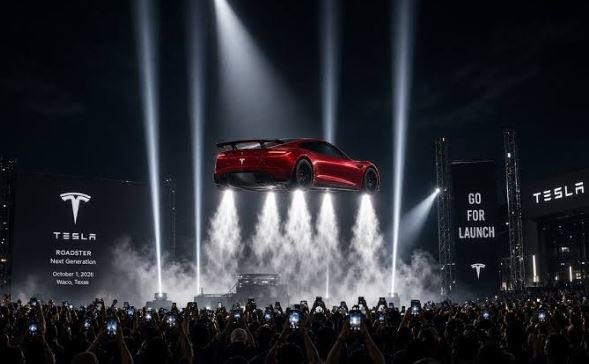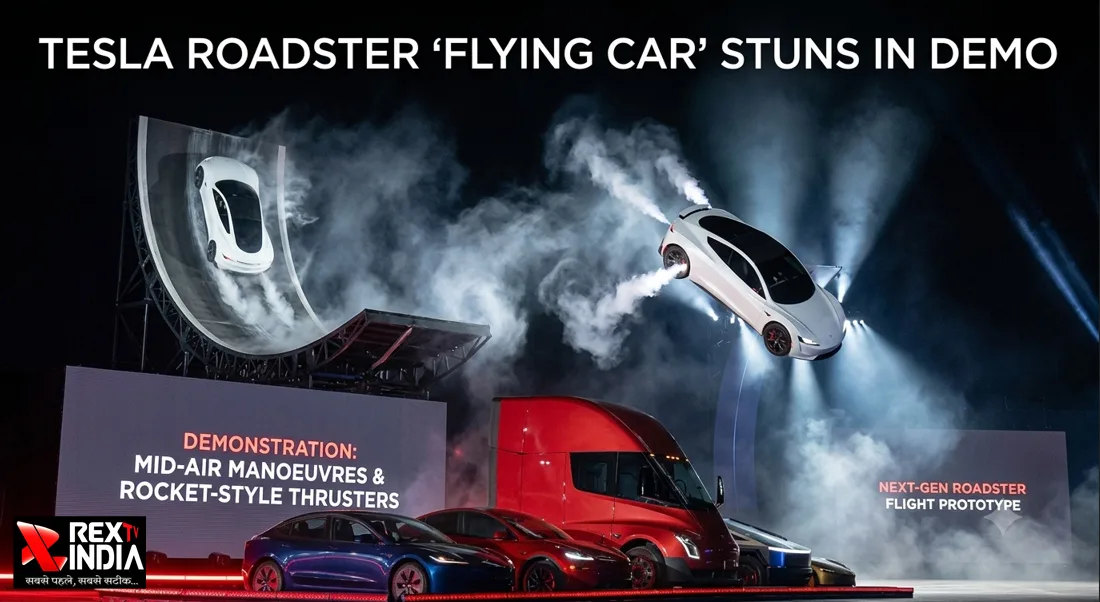
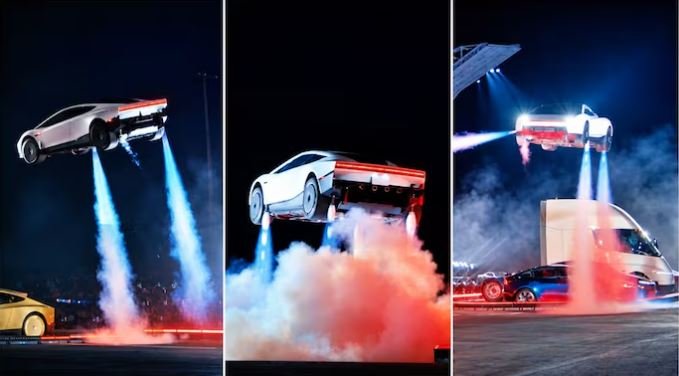
Tesla has officially stunned the automotive and aerospace industries with a live demonstration of its long-awaited next-generation sports car. Unveiled by Elon Musk at a high-profile event in Texas, the prototype performed mid-air maneuvers, flipped along ramps, and utilized cold-gas thrusters developed alongside SpaceX. The spectacle has generated massive worldwide interest, leaving investors and enthusiasts asking whether a practical Tesla flying car is finally becoming a reality.
Engineering Breakthroughs and Airborne Capabilities
The demonstration highlighted several technological innovations designed to push the boundaries of automotive performance. The Tesla flying car utilizes a multi-mode fan suction system combined with active aerodynamics to generate immense downforce, even enabling the vehicle to drive upside down along specialized ramps.
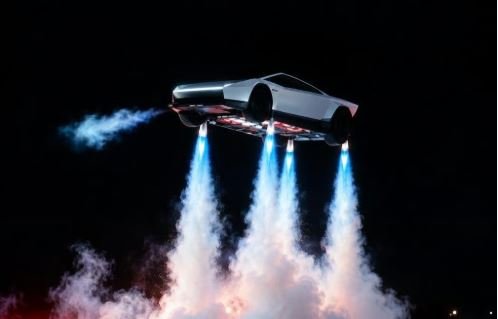
To achieve lift, the vehicle relies on cold-gas thrusters powered by pressurized gas. According to official company statements, these thrusters produce four to five times the force of conventional tire grip. During the showcase, the prototype successfully jumped over multiple parked vehicles and executed mid-air rotations before landing on its wheels.
+--------------------------+----------------------------------------------------+
| Feature                  | Stated Claim / Specification                       |
+--------------------------+----------------------------------------------------+
| 0–60 mph Acceleration    | Under 1.0 second                                   |
| Top Speed                | Over 230 mph (~370 km/h)                           |
| Primary Technology       | Cold-gas thrusters & multi-mode suction system     |
| Target Production Year   | 2028                                               |
+--------------------------+----------------------------------------------------+
Despite the impressive aerial stunts, key operational metrics remain unverified. Tesla has not released official figures regarding maximum flight altitude, horizontal air distance, or sustained flight endurance. Experts note that brief jumps do not equate to traditional aircraft capabilities.
Pricing, Reservation Tiers, and Production Timeline
Prospective buyers looking to secure the Tesla flying car face a structured reservation model rather than a fixed retail price. Tesla has established distinct deposit tiers reflecting different performance configurations:
-
Performance Model: Requires a $50,000 reservation deposit.
-
Thrust Edition: Requires a $250,000 reservation deposit for thruster acceleration features.
-
Rocket Variant: An invitation-only single-seat configuration equipped with a full flight system.
It is critical to note that these deposit amounts are not confirmed final selling prices. Furthermore, reports indicate that the full-flight Rocket variant is not approved for public road use due to regulatory and safety constraints. Operating thrusters near pedestrians and urban infrastructure presents complex legal hurdles that must be resolved prior to commercial distribution.
Tesla has set 2028 as its target production date, marking a decade-long evolution since the model was initially teased. Until independent testing confirms sustained flight performance, the vehicle remains an extraordinary prototype bridging electric hypercars and rocket engineering.