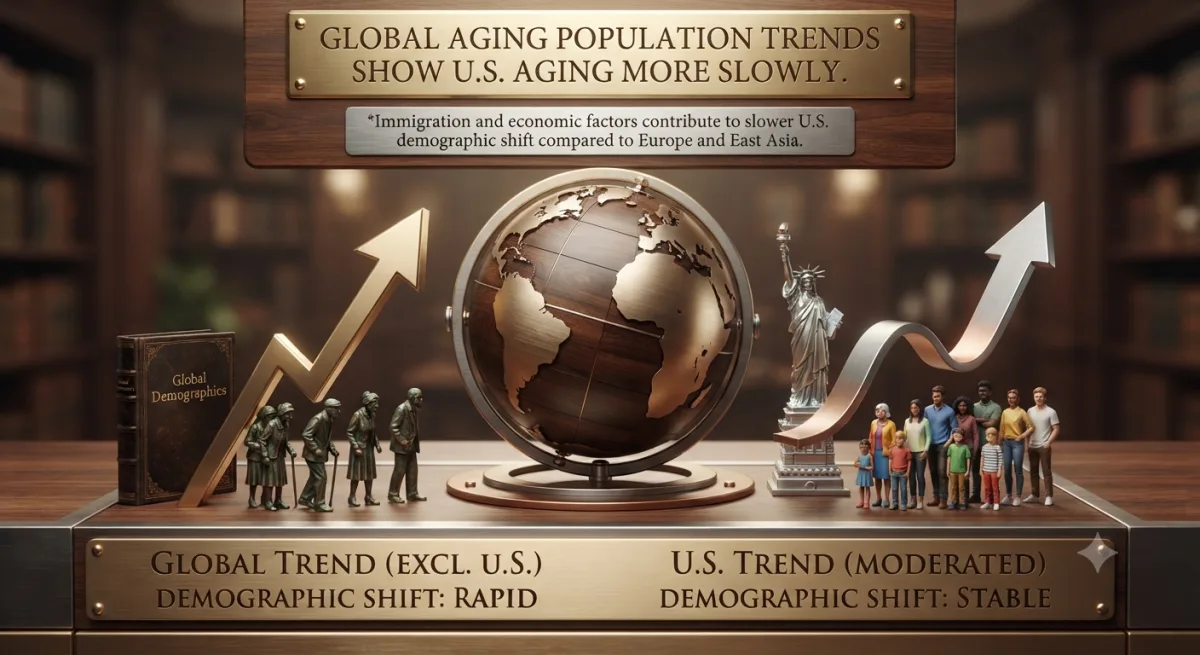
The world is aging faster than ever before, and the United States is part of this shift. According to the Census Bureau’s report An Aging World: 2025, the share of Americans age 65 and over will rise from 18.9% in 2025 to 23.4% by 2060. Yet, despite this increase, the U.S. will remain younger than nearly half of the world’s countries. These global aging population trends highlight both challenges and opportunities for policymakers and societies worldwide.
Global Demographic Shifts
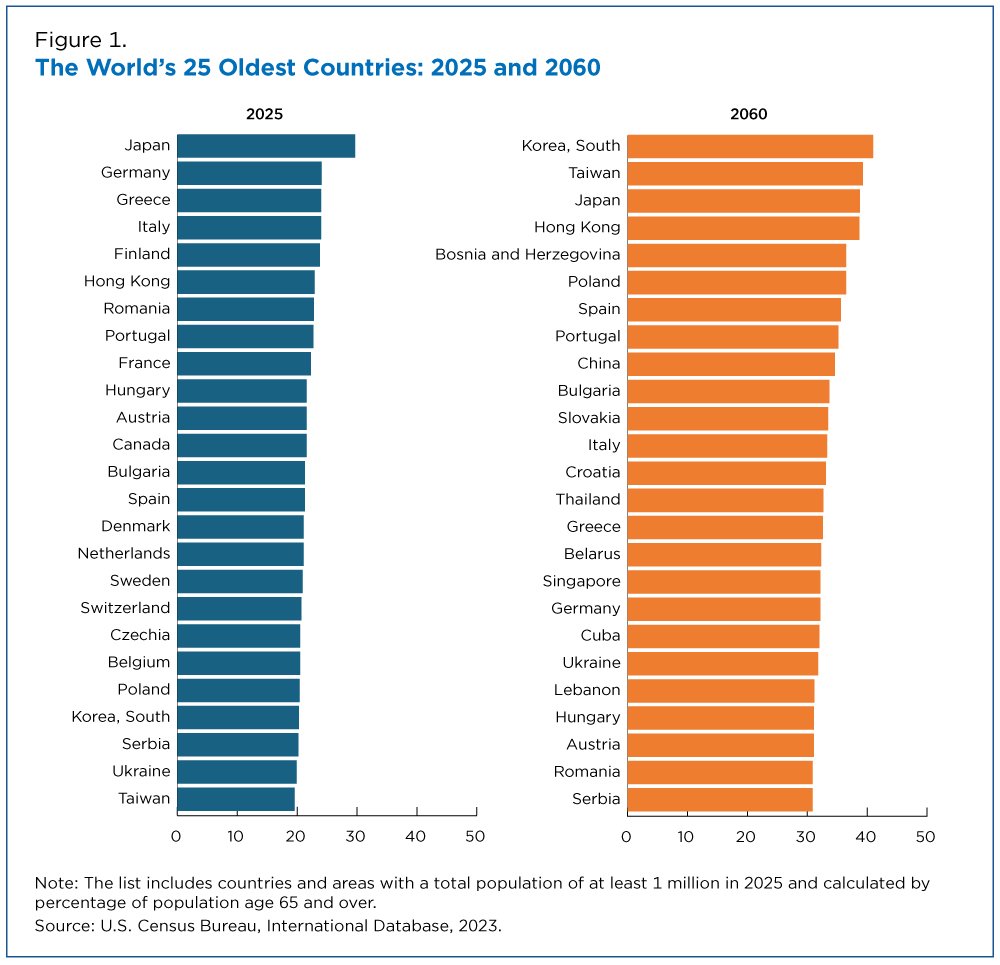
By 2025, the United States ranked as the 48th oldest country out of 227. By 2060, however, it is projected to fall to 110th place as other nations age more rapidly. Japan, once the oldest country with 29.7% of its population over 65, will drop to third place by 2060, with South Korea leading at 41%. Europe will remain the oldest region, but Africa will surpass Europe in sheer numbers of older adults, reflecting dramatic global aging population trends.
The report also notes that in 160 countries, mostly across Africa, Asia, Latin America, and the Caribbean, the population aged 85 and over will quadruple between 2025 and 2060. This historic demographic transformation means that many societies will face unprecedented demands on healthcare, pensions, and social support systems. The global aging population trends underscore the need for international cooperation to address these challenges.
Historic Demographic Milestones
Between 2020 and 2025, older adults surpassed young children ages 0 to 5 for the first time in human history. This gap is expected to widen further, reshaping family structures and economic priorities. Women continue to outnumber men among older adults due to longer life expectancy, though the gender gap is narrowing. These global aging population trends reveal a world where longevity is increasing, but not always accompanied by better health outcomes.
In the United States, the proportion of years lived in full health after age 60 has declined. Between 2016 and 2019, nearly three-quarters of U.S. adults over 65 lived with two or more chronic illnesses. Mobility issues also appear earlier in the U.S. compared to other nations, with 60% of adults ages 60 to 69 reporting problems, compared to less than 30% in Switzerland. These health challenges highlight the complexity of global aging population trends.
Health and Longevity Challenges
While people are living longer, the number of healthy years has not kept pace. This reality poses significant challenges for healthcare systems worldwide. The global aging population trends show that older adults are driving much of the world’s population growth, with more than half of the projected 2 billion increase by 2060 coming from those aged 65 and over. Addressing chronic illness, mobility issues, and healthcare access will be critical in ensuring quality of life for aging populations.
The Census Bureau’s findings emphasize that aging is not uniform across nations. While the United States will continue to grow older, it will remain relatively younger compared to many countries in Asia and Europe. These global aging population trends highlight the importance of preparing for a future where older adults form a significant share of the population, shaping economies, healthcare, and social systems worldwide.
You can check full repot here.
Disclaimer:
This report is based on facts obtained from reliable news agencies and sources. It is published for informational purposes only. The author, publisher, and editor will not be responsible in any way for any decision taken based on this report.

![Donald Trump Declares Victory: Promises a "Golden Age of America" [Image Source: ET]](https://news.rextvindia.com//images/1730884504.JPG)
