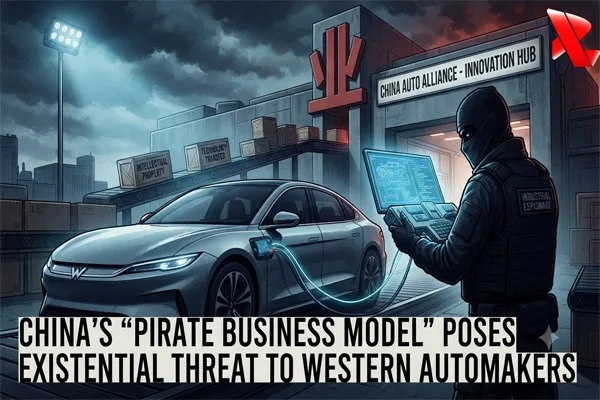
The prominent Chinese automaker BYD has secured the top spot in the global electric vehicle market. According to a new report the company through its alleged pirate business model has raised significant concerns about the future of domestic auto industries across Europe and North America. This rapid expansion is forcing global legacy manufacturers to reevaluate their market strategies as they face an unprecedented challenge. The massive scale of production achieved by Chinese brands has created an intense competitive environment that threatens traditional manufacturing strongholds.
European auto industry faces severe pressure
According to a report from a European media house BYD sold about 4.6 million vehicles in 2025. This impressive figure includes 2.26 million pure battery electric cars which allowed the company to surpass the delivery numbers of Tesla which stood at roughly 1.6 million units. This massive surge in sales volume has placed the Western automotive industry under threat as Chinese manufacturers rapidly capture substantial market share. The competitive pressure is forcing established Western brands to reconsider their long term operational plans.
The growing market share of Chinese electric vehicles in the European region is directly impacting legacy automotive manufacturers. Renowned global brands such as Volkswagen Mercedes Benz and BMW are experiencing intense pressure due to this influx of affordable alternatives. Industry experts warn that unless Western nations unite to address this challenge the ongoing shift could severely weaken the industrial bases of both Europe and North America leading to long term economic consequences for the region.
German automotive giants experience major setbacks
The comprehensive report describes the rise of BYD as the direct result of a specific business model built on piracy and heavy state support. The company initially started by copying the designs of Japanese automakers before transitioning into manufacturing its own batteries motors and semiconductors. This high level of vertical integration has placed the Western automotive industry under threat as the company can now scale up production at a fraction of the cost incurred by traditional manufacturers.
Foreign automakers were initially drawn to the vast Chinese consumer market through joint ventures which often required technology transfers. This approach has now severely impacted global brands like Volkswagen whose earnings in China have plummeted by over 80 percent during the past decade. The company is currently considering cutting 35000 German jobs by 2030 along with factory closures and massive worldwide job cuts that were once deemed completely unthinkable by industry analysts.
European regulatory response and North American expansion
In response to the growing challenge European Union officials have proposed a 17 percent countervailing duty on Chinese electric vehicles. However the response from the bloc remains fragmented due to conflicting internal trade interests and regional Chinese investments. Meanwhile Chinese automakers are proactively identifying new entry points into the North American market by utilizing strategic trade routes through neighboring countries to expand their global footprint.
Chinese auto brands are currently utilizing Canada and Mexico as entry points to build dealer networks and understand consumer preferences. This strategic preparation is taking place before they attempt to navigate regulatory access into the United States market. As these companies continue to scale up production the global automotive landscape is expected to undergo a major transformation forcing Western nations to adopt protective measures to safeguard their domestic manufacturing capabilities.
Disclaimer:
This report is based on facts obtained from trusted news agencies and sources. It has been published solely for informational purposes. For further details regarding the trade relations between Chinese electric vehicle manufacturers and Western automotive industries please verify with official sources. The author publisher and editor shall not be held liable in any manner for any decisions made based on the information provided in this report.