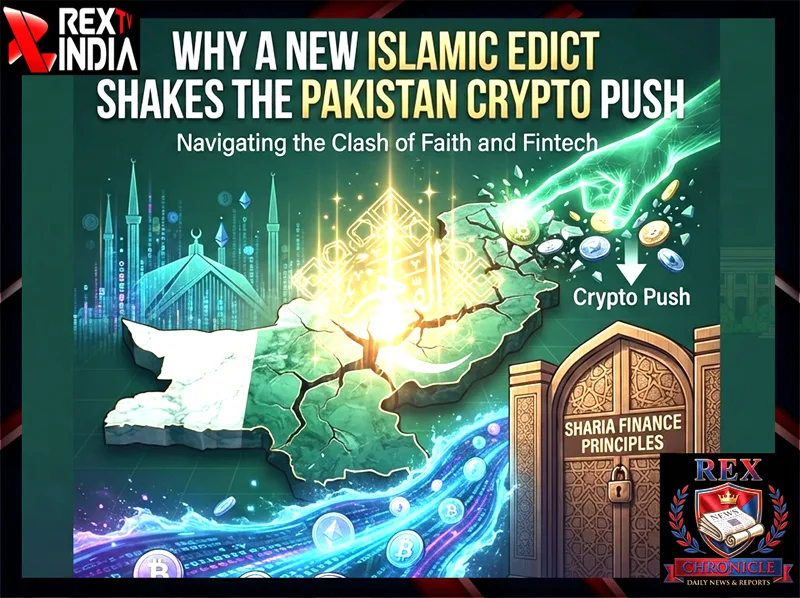
The ambitious Pakistan crypto push has run into significant regulatory friction following a decisive religious decree from the country’s leading Islamic scholars. Seeking a clear path forward, the national virtual assets regulator has formally approached the top seminary to clarify its stance on digital finance. This intervention comes after a major edict released last month cast severe doubts on the government's plans, threatening to stall the rapidly expanding regional digital economy. Officials are now working tirelessly to address these religious concerns and safeguard ongoing financial reforms.
PVARA Seeks Separation of Speculative Assets
Bilal bin Saqib, the chairman of the Pakistan Virtual Assets Regulatory Authority (PVARA), confirmed to Reuters that he had requested a definitive theological ruling on Wednesday. Saqib explained that the regulator is actively urging religious scholars to draw a sharp distinction between highly speculative cryptocurrencies and asset-backed digital tokens. This intervention was prompted by the seminary's ruling last month, which declared that all crypto-based transactions were entirely impermissible under Islamic law. Regulators firmly believe that separating speculative assets from utilities will resolve the deadlock.
Geopolitical Stakes with Washington
The final outcome of this ongoing dialogue holds immense geopolitical and economic weight, especially since the broader Pakistan crypto push is now central to Pakistan's diplomacy and strategic ties with Washington. As modern international trade and bilateral cooperation increasingly require progressive financial networks, successfully aligning local religious interpretations with global technological advancements is paramount. The state is extremely eager to prove that its digital ecosystem is secure, legally sound, and fully compliant with both global financial standards and ancient local religious traditions.
Transitioning to Tokenisation and Stablecoins
To achieve these goals, PVARA is actively pursuing a progressive strategy focused on tokenisation, stablecoins, and exchange licences. By shifting the regulatory focus toward asset-backed digital instruments, officials hope to demonstrate that the actualized Pakistan crypto push is built on genuine real-world value rather than speculative trading. This structured transition toward tokenised assets is intended to satisfy the stringent requirements of Islamic jurists while simultaneously providing a state-of-the-art framework for foreign investors who are looking to participate in Pakistan’s emerging technological landscape.
The Future of Shariah-Compliant Finance
Ultimately, resolving this religious debate is critical for the nation's financial future. If the seminary accepts the regulator's distinctions, it could supercharge the Pakistan crypto push by unlocking massive domestic capital under Shariah-compliant frameworks. Conversely, a prolonged stalemate may deter international partners and stifle local technological entrepreneurship. As PVARA awaits the seminary's response, the global community is watching closely, knowing that the intersection of Islamic jurisprudence and modern digital finance will define the trajectory of Pakistan’s economic integration in the modern era.